


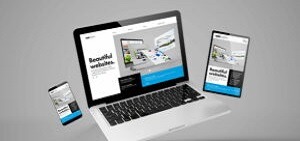
Designing Mobile-friendly Websites for your Business
Make sure you position your website where your customers will find it. Extend your audience reach and improve overall user.
Mobile web browsing is the new norm?
In the past decade or so handheld devices such as smartphones, tablets, smartwatch, etc. have conquered the internet web browsing industry. Although a great number of people prefer to experience content on a larger screen such as a laptop or a desktop, more and more individuals are opting to browse on mobile devices rather than desktops.
Here’s why, in 2018 around 262 million people in the United States were using their mobile devices to access the internet, however that number was projected to grow by 9.5%, reaching more than 287 million in the next three years. This just shows how mainstream and common it has become for individuals to use their smartphones to surf the web.
Due to a mobile phone’s portability and ease of use, people have a much stronger preference to find information on the go. It is highly unlikely that a person will be taking out a laptop at a food cart line to look up the reviews for a certain type of a dish. People and individuals tend to reach for their phones in that kind of situation. So, how can companies and web developers optimize websites to create the best user experience for the person who is surfing through the web daily on the phone?
Make the website flow
The importance of a good website design cannot be stressed enough, especially for mobile phone users. Why? It’s because on a smart phone the screen is much smaller and the design elements and features will tend to be more prominent than what the user will experience on a desktop website. Therefore, people will experience or feel that the typography and icons on a certain website for a mobile phone are not well suited for that particular website. So, choosing the right visual design with the support the color scheme, the style of the buttons and icons, typography, and even the placement of focal points and white space should all align with the overall company theme and brand expectation.
Simplify Menus
On a desktop, depending on the website design it is sometimes recommended to have expanded menu options due to large screen and space, so the user can choose which website to go to without having that one extra press of the button. On mobile phones, it is a different story, having simplified menus such as hamburger menus or animated side menus helps make the website look clean and organized. The user should not feel congested while browsing through different pages on the same website. The menus should be easy to locate and navigate to help user find what they are looking for. This contributes towards a better user experience as well as higher click or touch through rates on the website.
Size matters
A rule of thumb for text size and information on smartphones is that, the user should never have to zoom in order to read and understand what is written on the screen. This is a crucial element of the whole mobile website experience because, more often than not, this critical part of the website is overlooked and that results in a bad user experience. Having large texts helps with the readability but it also helps with how web developers spread information throughout the page. Having whitespaces between large texts can be very aesthetically pleasing for users, thus creating a good user experience.
Large Buttons
Unlike websites on desktops, mobile phones need to have big buttons on a website. Due to the advent of smartphones with multitouch capability, users are likely to accidentally touch or press on another button and in order to avoid that inconvenience web developers should increase the size of the buttons and have adequate amount of space between the several buttons and links because the user more likely than not will press the wrong button and that inconvenience can lead people to leave the website.
Desktop web development vs. Mobile Web development
It is true that developing a website for a smartphone is a much more difficult process than creating one for desktops or laptops. The reason for that is the fact that mobile phones don’t have the same type of responsiveness that desktop websites do. Transitions and animations work mostly on large screens but due to smartphone’s small LCD size makes it almost impossible to add fancy animations and effects. Another reason is that naturally, mobile phones take a longer time to load webpages compared to desktops so it is important to optimize desktop websites and mobile websites differently.
In conclusion…
Although essential features and elements mentioned above may not look so essential to a lot of web developers, it is vital that almost all the design elements that are discussed should be implemented effectively in order to enhance user experience. At Streamsoft Consulting, web developers pay careful attention to how websites appeal to the target audience on a multi-platform level. Web developers and testers go through phones and desktop views on client websites to observe any unalignment, bad readability, etc. In addition, Streamsoft Consulting provides detailed SEO analysis services for small businesses to help them drive internet traffic towards their business website. All these factors together have shown how they can exceed a customer’s expectations. So now, let Streamsoft Consulting help you exceed your customers’ expectations, by developing the best website for your business.