Preventive Medicine: What Is It and How Do You Do It?
Achieve and maintain a healthy mind and body with a lifestyle that helps you prevent certain diseases. Implement and practice preventive measures by re-evaluating your everyday choices.
You Only Live Once – Live a Healthy Life!
Health and Lifestyle
If there is one thing the COVID-19 Pandemic has emphasized to every one of us, it is that health and lifestyle come hand-in-hand. These can never be torn apart because how we live our lives will manifest through our overall well-being. That is where Preventive Medicine comes into play.
Even before the Pandemic, various diseases or illnesses emerged and spread fairly easily. In fact, heart diseases and cancers are the top 2 leading causes of death in the USA. Now that we are in the Pandemic, these diseases, in addition to COVID-19, continue to threaten our overall health.
Disease prevention is a choice.
There are ways to avoid these diseases, but it takes conscious work. Still- as the old saying goes- “prevention is better than cure.” According to the Centers for Disease Control and Prevention (CDC), disease prevention can be divided into primary, secondary, and tertiary levels.
Health preventive measures fall under primary prevention. These preventive medicine measures focus on intervening before an actual disease occurs. This includes things like altering risky health behaviors and transforming them into good health habits. Next, secondary prevention is the stage where early screening and detection of diseases occurs before signs and symptoms manifest. These preventive medicine measures aim to prevent a foreseeable illness brought about by hereditary or environmental factors.
Lastly, tertiary prevention encompasses the therapeutic measures post-diagnosis to manage the disease and prevent further progression or complications.
The hope is that everyone can maintain the primary level of prevention by promoting good health habits and healthy lifestyle choices. But, since this is not always possible, remind yourself that the prevention ladder gives you many chances to turn things around. There is not one, not two, but three. How liberating can that be? You have the power of choice in each of the levels of preventive medicine. So, combine health and lifestyle by choosing your health daily with these good health habits we are about to share with you.
Primary Habits: Everything starts with a choice!
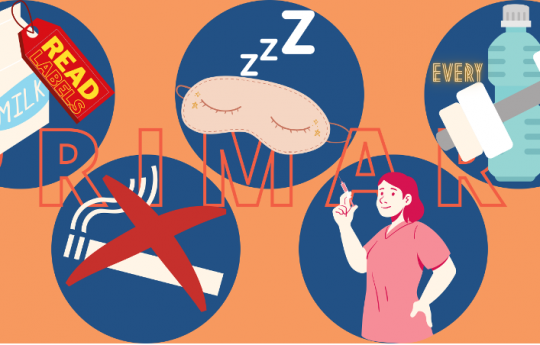
🗹 Choose to eat healthy foods.
READ NUTRITION LABELS. Some may say that healthy eating is very restrictive. But here, we explain how to eat healthy without the feeling of deprivation which ultimately lets you enjoy various healthy lifestyle choices. A healthy diet is based on a balanced diet that allows us to take in the appropriate amounts of macronutrients and micronutrients that our bodies need.
What are macronutrients and micronutrients anyway? These are the bits of information placed on your food labels – calories such as carbohydrates, proteins, and fats comprise macronutrients, while vitamins and minerals form micronutrients. Now, how do we know how much of these nutrients our body needs? By using simple tools such as a daily caloric needs calculator. Here is one option: Mifflin-St Jeor calculator! It will give you an optimal number of calories you should have per day according to your age, height, weight, and daily activity level.
You can also couple this with a diet and exercise tracker such as the MyFitnessPal application. A supplemental tool like this will help you visualize your daily exercise, macronutrient, and micronutrient expenditure. Once you make this a habit, you’ll realize that choosing to eat healthy does not necessarily entail food restrictions. Instead, it is choosing food that will give your body the nutrients it need.
🗹 Choose quality sleep and regular exercise.
BALANCE SLEEP AND EXERCISE. in your daily life to optimize your blood circulation, heart condition, brain function, and overall quality of life. You cannot maximize one but have the other suffer.
Follow daily healthy sleep habits to reap in their numerous benefits later on. Start by sleeping and waking up at the same time each day. Having a constant sleep-wake cycle is just as important as sleeping 7 to 9 hours a day. If you are having difficulties sleeping, you may want to check this out for other tips for a night of better and more restful sleep.
Next, make “exercise” a daily activity, especially nowadays, where people have been subject to prolonged sitting since work-from-home culture has set in. Plan your workouts. Be sure to incorporate cardio with strengthening exercises in your weekly routine.
For starters, it is best to sign up for a workout class or subscribe to a workout coach on YouTube based on the training you have planned for yourself. Then, no matter how you do it, do it consistently, and little by little, you’ll surely reach your fitness goals!
🗹 Choose to be smoke-free.
Do you know that smoking has been one of the top risk factors for various heart and lung diseases? It even increases both men and women’s risk for lung cancer by 25x regardless of their family disease histories and other predisposing factors. So, there is only one thing to say about smoking: tobacco, second-hand, or e-cigarette smoking – QUIT!
Smoking cessation dramatically improves the quality of health, reduces the risk for premature death, and reduces smoking-related diseases. These diseases include cancers, cardiovascular diseases, and chronic obstructive pulmonary diseases (CDC, 2020). However, if you experience any difficulties when quitting try following these tips. First, it may help to start with a quitting plan, do not do this blindly. Second, identify your triggers, and list concrete steps on how to avoid them purposefully. Third, have an accountability partner who knows about your timeline on quitting; may it be a friend or family, have someone remind you and check on you from time to time.
🗹 Choose to be vaccinated.
Lastly, in expanding your healthy lifestyle choices, you have to look into your medical needs. Again, as “prevention is better than cure,” it is always best to choose proactive measures to protect your health – with vaccinations being one of them. In light of the COVID-19 Pandemic, this is a gentle reminder that everyone should prioritize vaccination against SARS-CoV-2. Do you have other concerns about the COVID-19 vaccines? Click here and be guided accordingly.
Moreover, be aware of essential vaccination schedules for your age and update them as soon as possible. These vaccinations provide an additional barrier to contracting infectious diseases that may be harmful to your health and to others.
Secondary Habits: What to watch out for!
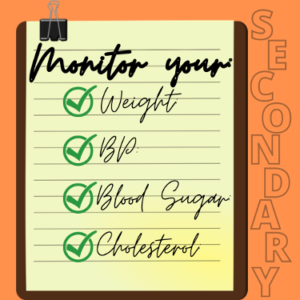
🗹 BMI – Monitor your Weight
Do not miss screening tests appropriate for your age. Click here for an infographic on important health screenings needed by age and gender. In addition, watching your body mass index (BMI) is vital in determining whether your weight is still appropriate for your height. BMI awareness is essential because obesity increases your risk for various diseases like hypertension, diabetes, heart diseases, and many others.
🗹 Blood Pressure
Blood pressure (BP) is another critical determinant of your internal organs’ health. According to the CDC, about 45% of American adults have hypertension – which is evidenced by how prevalent kidney and heart diseases have been for years now. So keeping your BP in check will give you a gauge of whether you are bordering on a threat to your health. Keep in mind that the normal BP is <120/80mmHg.
🗹 Blood Sugar
Having known sugar as a killer may give us the impression that cutting down on one’s sugar intake is all it takes to be free from sugar-related diseases such as diabetes. But it is also essential to know that our body produces its own sugar and has various uses, storage, and elimination mechanism for such; thus, it will always be necessary to monitor your blood sugar levels. Ultimately, a well-maintained blood sugar level will keep you away from heart diseases and cancers.
🗹 Cholesterol Levels
Last but not least, you should increase how frequently you monitor your cholesterol levels as you age. Generally, there are three types of cholesterol markers – High-density lipoprotein (HDL), Low-density lipoprotein (LDL), Very-low-density lipoprotein (VLDL). As we know them, the HDLs, or good cholesterol, are cholesterol absorbers and transporters to the liver, where they will be flushed out. Therefore, these are the ones we need more abundantly compared to the LDLs and VLDLs. The latter pose more significant risks of heart problems and stroke due to plaque build-up in blood vessels, especially as one ages.
Tertiary Habits: Adhere and Commit!
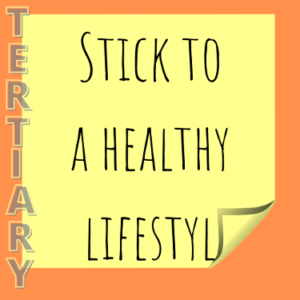
🗹 Adhere to your Treatment Regimen
Whether for your acute antibacterial treatment regimen, chronic disease maintenance management, post-injury rehabilitation program, or anything similar, adhering to your health regimen is of utmost value in maintaining a healthy life. Compliance with these health-restoring and building strategies is very much appreciated. Still, devotion to them adds more sustainable and promising outcomes because you did them for yourself and no one else, not only because your doctor told you to, but also because you have decided to make your health your priority.
🗹 Commit to Lifelong Lifestyle Modifications and Healthy Habits
You only live once – true. So, maximize that one life by committing to a healthy life and proactively heed preventive medicine. You can do this!
If you are a medical practitioner and want to establish a practice to help your clients commit to a healthy lifestyle for disease prevention, you can reach us here!